Reading Dog Body Language
Tails, ears and the play bow. Learn to read a dog's ears, eyes, tail and posture: happy, playful, worried or warning signs, with tips from the RSPCA and the American Kennel Club.
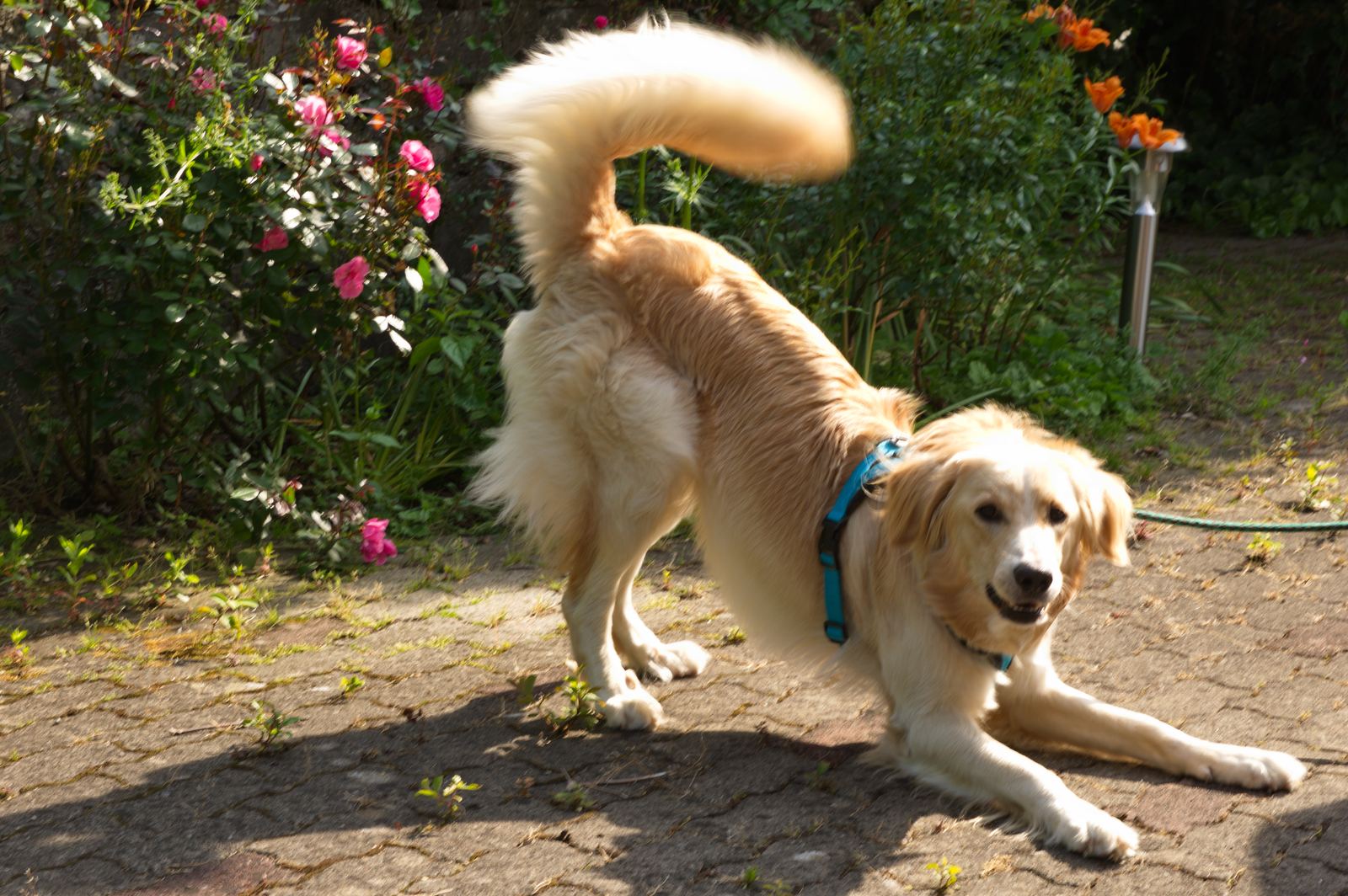
The classic play bow: Thomas Zimmermann (THWZ), CC BY-SA 3.0 de
Why body language matters
Dogs talk mostly with their bodies. Learning a few signals helps you know when your dog is having fun, when they need a break, and when to give another dog space. It also keeps children and visitors safer.
The golden rule from welfare groups is to look at the whole dog: ears, eyes, mouth, tail, posture and what is happening around them.
Happy and playful
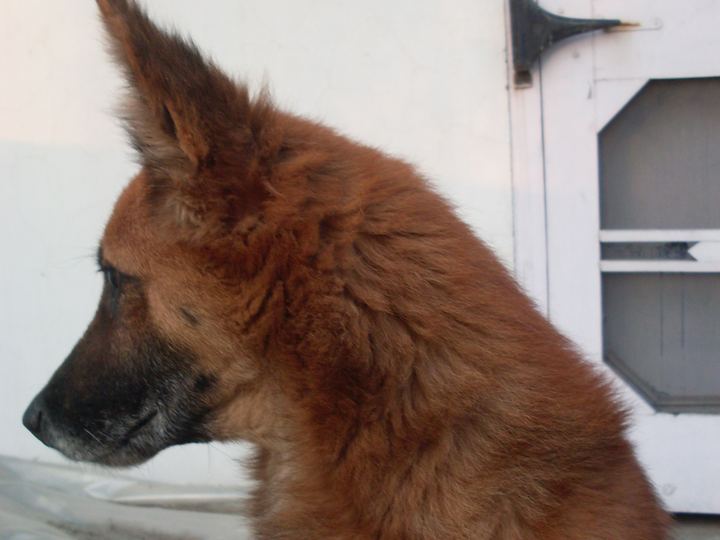
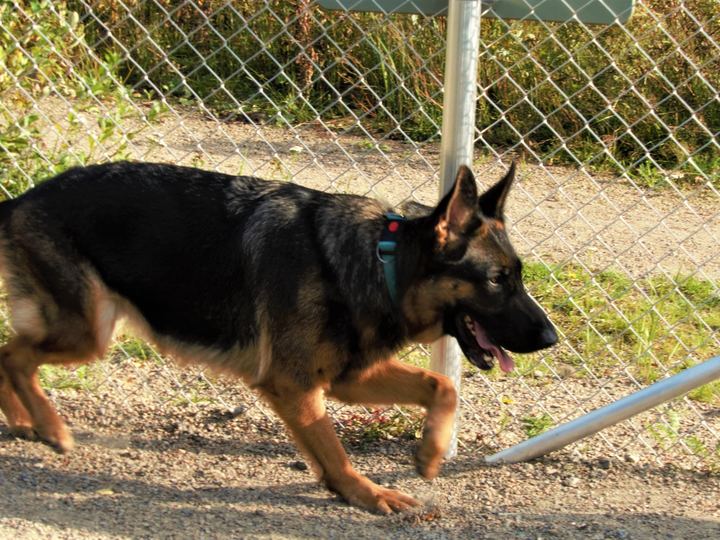
The RSPCA describes a relaxed dog as having a loose, open mouth, ears in their natural position, normal-looking eyes, smooth fur and weight spread evenly over all four paws. The face looks interested and alert but calm.
A dog inviting play will often drop its front end low while its rear and tail stay up, sometimes with excited barking. This is the play bow, and Nova uses it with great enthusiasm whenever a game might be on offer.
The AKC adds that a wag shows arousal, which can be happy excitement or something less comfortable. A loose, sweeping wag with a wiggly body usually means a friendly dog, while a fast, stiff, twitchy wag can signal tension. Another stress sign to know is whale eye, where the whites of the eyes show.
Worried or scared
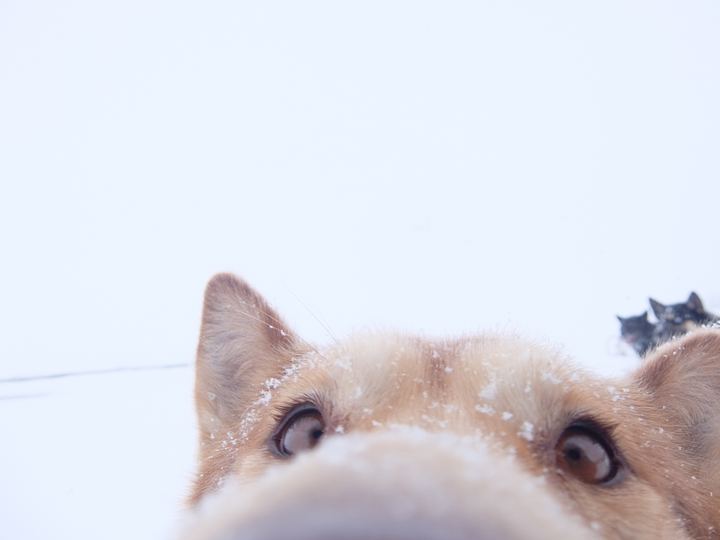
Signs of worry can be small. The RSPCA lists turning the head away, avoiding eye contact, licking lips, yawning and ears pulled back. A frightened dog may hold its body and head low, tuck its tail under, or lift a front paw.
These dogs are asking for space. Calmly moving away from whatever is bothering them is usually the kindest response, rather than pushing them to face it.
Back off signals
A dog that stands stiffly with weight forward, raised hair along the back, a high stiff tail and a hard stare is saying stop. A snarl with lips drawn back and teeth showing is a clear warning. Never punish a growl; it is honest communication and suppressing it can remove the warning before a bite.
Also remember that a wagging tail does not always mean a happy dog. A high, stiff wag can come with tension, so always read it alongside the rest of the body. If you see frequent fear or aggression signs, talk to your vet or a qualified behaviourist.
Facts on this page were checked against these sources.
- The classic play bow: Thomas Zimmermann (THWZ), CC BY-SA 3.0 de
Text written by NovaHova.